
Outdoor furniture makes gardens, patios, balconies, and backyards more comfortable and attractive. Whether you have a stylish dining set, a wooden bench, metal chairs, or a comfortable outdoor sofa, regular cleaning helps maintain its appearance and usability. However, outdoor furniture is constantly exposed to dust, rain, sunlight, pollen, bird droppings, and other environmental elements. Over time, these conditions can cause stains, fading, mildew, and unpleasant odours if the furniture is not maintained properly.
Learning how to clean outdoor furniture is an important part of protecting your investment and creating a welcoming outdoor space. Different materials require different cleaning methods, so using the right products and techniques is essential. While plastic furniture can often be cleaned with mild soap and water, wood, wicker, metal, and fabric may need more specialised care. A consistent cleaning routine can prevent dirt from building up and reduce the need for intensive maintenance. With a few basic supplies and the right approach, you can keep your outdoor furniture looking attractive throughout the year.
Why Regular Outdoor Furniture Cleaning Matters
Outdoor furniture experiences more environmental exposure than most indoor furnishings. Dust settles on tabletops, moisture collects in corners, and food or drink spills can leave stubborn marks. If these problems are ignored, they may gradually affect the furniture’s appearance and condition. For example, moisture can contribute to mould growth on cushions, while neglected metal surfaces may develop rust when their protective coating becomes damaged.
Regular cleaning helps remove contaminants before they become difficult to manage. It also allows you to inspect furniture for loose screws, cracks, chipped paint, and other signs of wear. Identifying these problems early can help prevent more expensive repairs later.
Clean furniture also makes outdoor areas more pleasant for family meals, gatherings, and relaxation. Chairs feel fresher, cushions smell better, and tables become ready for everyday use. Establishing a simple maintenance schedule is usually more effective than waiting until the furniture looks heavily soiled. Even a quick weekly wipe and a more thorough monthly cleaning can make a noticeable difference.
Essential Supplies for Cleaning Outdoor Furniture
Before starting, gather the cleaning supplies appropriate for your furniture materials. Most routine cleaning tasks require only a few inexpensive items, so you do not necessarily need specialised commercial products. Mild dish soap, warm water, a soft-bristled brush, microfiber cloths, and a bucket are useful for many common surfaces.
A garden hose can help rinse outdoor furniture, but avoid high-pressure washing unless the manufacturer specifically permits it. Excessive pressure may damage wicker strands, remove paint, force water into joints, or harm wooden finishes. A soft sponge is generally suitable for delicate materials, while a small brush can reach narrow gaps and textured surfaces.
Useful cleaning supplies include:
-
Mild dish soap or a suitable material-specific cleaner.
-
A bucket of clean water.
-
Soft microfiber cloths and non-abrasive sponges.
-
A soft-bristled brush for crevices and textured areas.
-
Dry towels for removing excess moisture.
-
Protective gloves when using cleaning products.
-
Manufacturer-approved treatments for wood, metal, or outdoor fabrics.
Always test a cleaning solution on a small, inconspicuous area first. Avoid mixing household chemicals, particularly bleach with ammonia or acidic cleaners, because dangerous gases can form.

How to Clean Outdoor Furniture Made from Different Materials
The best cleaning technique depends on the material, finish, and construction of each furniture piece. Before applying water or cleaning products, check the manufacturer’s care instructions. Some surfaces tolerate regular washing, while others need limited moisture or specific treatments to prevent damage.
The following table provides a practical overview of common outdoor furniture materials and their cleaning requirements.
|
Furniture material |
Recommended cleaning method |
Important precaution |
|---|---|---|
|
Plastic or resin |
Mild soap, warm water, and a soft sponge |
Avoid abrasive scouring pads |
|
Teak or other wood |
Gentle washing with a damp cloth and suitable wood cleaner |
Do not soak the wood |
|
Aluminium |
Soapy water and a microfiber cloth |
Avoid harsh abrasives |
|
Wrought iron |
Mild soap, soft brush, and thorough drying |
Check for rust or chipped paint |
|
Synthetic wicker |
Soft brush and diluted soapy water |
Avoid excessive pressure |
|
Outdoor cushions |
Follow the fabric label and use an approved cleaner |
Dry completely before storage |
|
Glass tabletops |
Suitable glass cleaner or mild soapy water |
Avoid scratching the surface |
Cleaning Plastic Outdoor Furniture
Plastic furniture is popular because it is lightweight, affordable, and relatively easy to maintain. However, outdoor plastic chairs and tables can accumulate dust, greasy marks, and greenish residue in damp conditions. Begin by removing loose dirt with a dry cloth or soft brush. Mix a small amount of mild dish soap with warm water, then wipe the surface using a non-abrasive sponge.
Pay attention to the undersides of seats, chair legs, and joints where dirt tends to collect. Rinse away the soap with clean water and dry the furniture with a towel or allow it to air-dry in a shaded, well-ventilated area. For stubborn marks, use a cleaner approved for the particular plastic material rather than aggressive chemicals.
Avoid rough scrubbers and strong solvents that may scratch, discolour, or weaken the surface. If the plastic has become faded from prolonged sunlight, cleaning may improve its appearance, but it will not necessarily restore the original colour. Protective covers and shade can help slow further deterioration.
Cleaning Wooden Outdoor Furniture
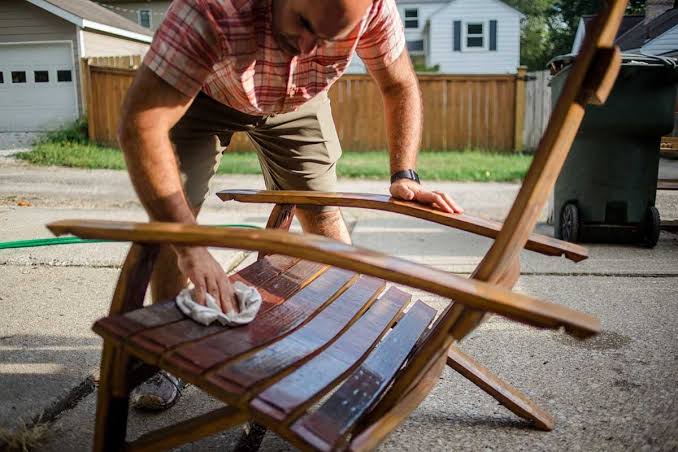
Wooden outdoor furniture offers a natural appearance that suits gardens, decks, and patios. Materials such as teak, acacia, and eucalyptus are commonly used outdoors, but their finishes and moisture tolerance vary. Begin by brushing away loose dirt and leaves. Use a damp cloth with a wood-safe cleaner, working gently along the grain where practical.
Avoid soaking wooden surfaces or allowing water to remain trapped around joints. After cleaning, wipe away excess moisture and allow the furniture to dry thoroughly in a shaded, ventilated location. Excessive direct heat during drying may cause some wooden components to dry unevenly.
Unfinished teak may naturally develop a silver-grey patina as it ages. This colour change does not automatically mean the wood is dirty or damaged. If you prefer a warmer appearance, consider a suitable teak treatment according to the manufacturer’s instructions. Painted, sealed, or oiled wood may require different care, so do not apply oils or sealants without checking compatibility.
Cleaning Metal Outdoor Furniture
Metal furniture can be durable and stylish, but the correct maintenance method depends on whether it is made from aluminium, steel, or wrought iron. Aluminium usually resists rust better than ordinary steel, while painted iron and steel may corrode if their protective coating becomes damaged.
For routine cleaning, remove dust using a soft cloth and wash the surface with mild soapy water. Use a soft brush around decorative details, joints, and screw heads. Rinse with clean water and dry thoroughly, paying particular attention to connections and areas where moisture might collect.
Inspect the furniture periodically for bubbling paint, scratches, rust spots, or loose fasteners. Small areas of damaged coating may need careful repair using a compatible product. Follow the manufacturer’s instructions for surface preparation and repainting. Avoid steel wool and harsh abrasives unless the product’s care guidance specifically recommends them, as these can damage protective finishes.
Cleaning Wicker and Rattan Outdoor Furniture
Wicker furniture adds texture and a relaxed appearance to outdoor seating areas. However, its woven construction can trap dust, pollen, and small pieces of debris. The cleaning method depends on whether the material is natural rattan or synthetic outdoor wicker.
Start by removing loose dirt with a soft brush or vacuum cleaner using a suitable brush attachment. Mix mild soap with water and gently wipe synthetic wicker with a damp cloth or sponge. Use only limited moisture on natural rattan, as prolonged exposure to water may weaken the fibres or encourage damage.
Avoid aggressive scrubbing and high-pressure water jets, which may loosen strands or affect the weave. Check the underside and joints carefully, as these areas can retain moisture. After cleaning, let the furniture dry completely in a well-ventilated, shaded space. Keeping wicker furniture covered during prolonged wet weather can help extend its useful life.
How to Clean Outdoor Furniture Cushions and Fabric
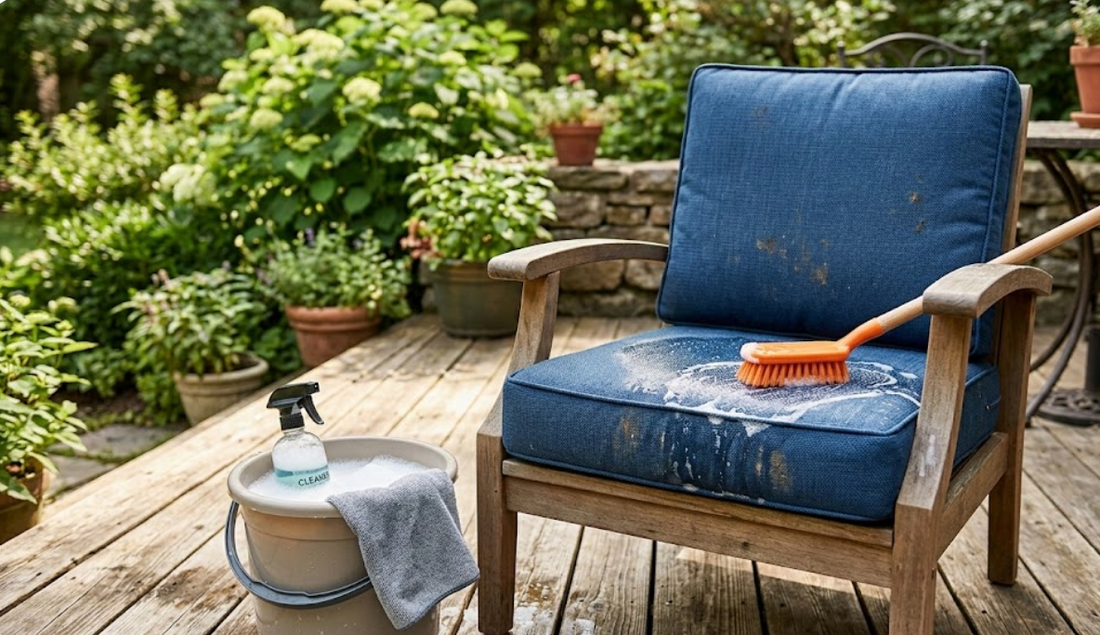
Outdoor cushions make seating more comfortable, but they can collect body oils, food spills, dust, pollen, and moisture. Before cleaning, inspect the care label to determine whether the covers are removable, machine washable, or suitable only for spot cleaning.
For routine maintenance, shake the cushions to remove loose debris and brush away surface dirt. If the manufacturer permits washing, use an appropriate detergent and follow the recommended water temperature. For spot cleaning, apply a mild fabric-safe solution to a small area and gently blot the stain with a clean cloth rather than rubbing it deeply into the fibres.
Rinse away cleaning residue when required by the care instructions. Allow cushions to dry completely before putting them back on the furniture or storing them. Damp foam and fabric can develop unpleasant odours or mould, particularly in humid conditions. If the cushions have removable covers, make sure the covers and inner padding are both completely dry before reassembly.
Removing Common Stains from Outdoor Furniture
Outdoor furniture stains can come from food, beverages, leaves, bird droppings, tree sap, and environmental pollution. Treating marks promptly is usually easier than removing them after they have dried. Start with the mildest suitable cleaning method and increase the cleaning strength only when necessary.
For food and drink spills, blot away excess liquid before cleaning with mild soap and water. Remove loose bird droppings carefully, dampening the residue first if necessary to avoid spreading dry material. Wear gloves and wash your hands afterwards. Leaf stains may require repeated gentle cleaning, while sticky tree sap may need a material-approved cleaner.
For mildew on compatible hard surfaces, use a suitable cleaner and follow its label directions. Porous wood, natural wicker, and outdoor fabrics may need different treatments. Do not automatically use bleach, vinegar, or abrasive powders on every material, because these can cause discolouration or damage. If a stain remains, consult the furniture manufacturer’s recommendations before trying a stronger product.
A Simple Outdoor Furniture Cleaning Schedule
A consistent routine helps prevent dirt from accumulating and makes deeper cleaning easier. The exact frequency depends on local weather, the amount of use, nearby trees, and whether the furniture stays uncovered.
Consider following this practical schedule:
-
Weekly: Remove loose dust, wipe tabletops, and check for fresh spills.
-
Every month: Wash frequently used chairs, tables, and other accessible surfaces.
-
After heavy rain: Check for standing water, trapped moisture, and dirt buildup.
-
Seasonally: Inspect joints, fasteners, protective coatings, and cushion condition.
-
Before long-term storage: Clean every piece thoroughly and allow it to dry completely.
-
During extended wet weather: Use suitable covers or move vulnerable furniture to a protected location.
You can adjust this routine to suit your outdoor space. Furniture beneath trees may need more frequent cleaning because of falling leaves, sap, and bird droppings. Pieces near swimming pools may require extra attention to remove chemical residue, while coastal environments may call for more frequent rinsing to reduce salt buildup.
Common Mistakes to Avoid When Cleaning Outdoor Furniture
Even simple cleaning tasks can cause damage when the wrong technique or product is used. One common mistake is assuming every material can withstand the same cleaning solution. A strong chemical that works on one hard surface may discolour painted metal, strip a wooden finish, or damage fabric.
Another mistake is using too much water on wood and natural wicker. Moisture trapped in seams, joints, or woven sections may contribute to deterioration. Similarly, leaving cushions damp after washing can create odours and encourage mould growth.
Avoid these common errors:
-
Using abrasive brushes on delicate or painted surfaces.
-
Applying untested chemicals directly to visible areas.
-
Using high-pressure washing without checking manufacturer guidance.
-
Leaving soap residue on furniture after cleaning.
-
Storing cushions while they are still damp.
-
Ignoring rust spots, cracks, and loose screws.
-
Leaving furniture uncovered during prolonged harsh weather when protection is needed.
Gentle cleaning, complete drying, and regular inspections are usually the safest approach to long-term care.
Tips to Keep Outdoor Furniture Clean for Longer
Preventive maintenance can reduce cleaning time and help preserve the appearance of outdoor furniture. Start by choosing an appropriate location. Whenever possible, place furniture beneath a suitable shelter or in an area with partial shade to reduce prolonged exposure to sunlight and rain. Make sure the location still allows enough airflow to prevent moisture from becoming trapped.
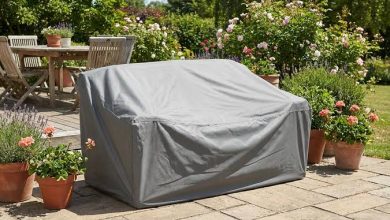
Use furniture covers that fit properly and are designed for outdoor conditions. Breathable covers are often preferable to coverings that trap condensation. Remove covers periodically to inspect the furniture and allow moisture to escape. During severe weather, store lightweight cushions and other vulnerable accessories indoors.
Clean spills as soon as possible, brush away leaves regularly, and avoid placing wet objects directly on wooden tabletops. Check fasteners and joints during routine cleaning so small maintenance issues can be addressed early. These simple habits make it easier to keep your outdoor seating and dining areas ready for everyday use.
Conclusion
Keeping outdoor furniture clean does not require expensive equipment or complicated techniques. The most important steps are choosing a suitable cleaning method for each material, removing dirt regularly, treating stains promptly, and allowing every piece to dry properly. Plastic, wood, metal, wicker, and fabric all have different maintenance requirements, so checking manufacturer guidance helps prevent accidental damage.
Understanding how to clean outdoor furniture also makes it easier to develop a routine that fits your lifestyle and local weather conditions. Weekly dust removal, periodic washing, seasonal inspections, and proper storage can help maintain comfort and appearance over time. By combining gentle cleaning with preventive care, you can enjoy a cleaner, more inviting patio, balcony, garden, or backyard while helping your furniture remain in good condition for years to come.