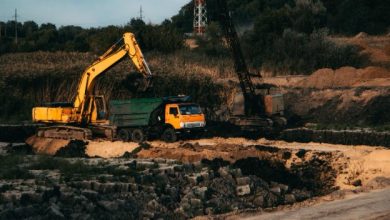
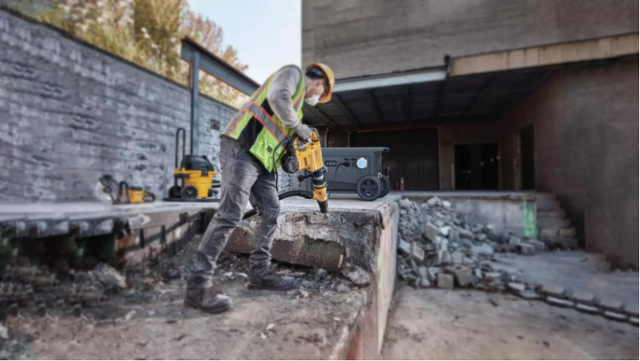

Contractors make hundreds of decisions on every project. Material choices, scheduling, subcontractor selection, equipment procurement each one carries consequences that play out over the life of the job. Power supply is one of those decisions, and it is one that most contractors make by default rather than by deliberate choice. The diesel generator gets ordered because it was ordered last time, and the limitations that come with it get absorbed as background noise because nobody has stopped to ask whether a better option exists.
That question is worth asking now. The energy landscape for job site power has shifted meaningfully in the last several years, and contractors who have not revisited their approach to temporary power are likely paying more than they need to and accepting operational constraints that are no longer necessary.
What Has Actually Changed
Battery technology has improved at a pace that most people outside the energy sector have not fully tracked. The lithium iron phosphate chemistry that underpins modern industrial battery systems delivers energy density, cycle life, and thermal stability that earlier battery technologies could not approach. A system built on this chemistry can be discharged and recharged thousands of times over its service life without the capacity degradation that made earlier battery systems impractical for demanding applications.
The inverter technology that converts stored battery power to usable AC output has improved in parallel. Pure sine wave output at industrial wattage levels, surge handling that accommodates the startup demands of large motors, and thermal management that allows sustained high output without throttling or shutdown are all characteristics of current generation industrial systems that were not reliably available at accessible price points until recently.
For contractors, what this means in practical terms is that a portable Industrial Power Station purchased today is a fundamentally different piece of equipment from what carried that name five years ago. The capacity is higher, the reliability is better, and the total cost of ownership over the service life of the equipment compares favorably with alternatives in a way that was not true when the technology was less mature.
How Contractors Are Using Them
The use cases that contractors are finding most valuable fall into several distinct categories, and understanding where battery industrial power delivers the clearest advantage helps in making the right procurement decision.
The first is site mobilization. On any new project, there is a period between when work begins and when a permanent or semi-permanent electrical connection is established. During this window, crews need power for site setup, early ground work, survey equipment, and temporary facilities. This is typically when generator rental costs are highest relative to the work being done, because the load profile is intermittent and the generator is being sized for peak rather than average demand. A battery industrial power system sized for the actual load during mobilization, recharged overnight from whatever connection is available, eliminates generator rental costs during this phase entirely on most projects.
The second is task-specific deployment. Certain operations on a construction site happen in locations where running cable from a fixed power source is impractical. Core drilling on upper floors of a structure under construction, excavation work at the far end of a large site, temporary works in confined spaces where cable management is a safety concern these are situations where a self-contained power system positioned at the point of work solves a real operational problem rather than simply replacing something that was already working adequately.
The third is indoor finishing work. Once a structure is enclosed and interior finishing begins, the calculation around generator use changes. Fumes that were manageable in open air become a workplace safety issue indoors. Noise that was acceptable on an open site becomes a problem in enclosed spaces where crews need to communicate and where sound carries to neighboring occupants. Battery systems address both concerns simultaneously without requiring any change to how the work itself is done.
Specifying the Right System
Contractors approaching industrial battery power for the first time sometimes make the mistake of applying consumer product logic to an industrial procurement decision. Comparing peak wattage numbers between systems without understanding how those numbers are measured, or selecting based on price per kilowatt hour of storage without accounting for discharge rate limitations, leads to specifications that underperform in the field.
The specifications that matter most for contractor applications are continuous output wattage rather than peak, surge handling capacity expressed as a multiple of continuous output, battery capacity in kilowatt hours relative to the actual load and runtime required, recharge time from available sources, and the physical durability ratings of the unit relative to the conditions it will operate in.
SOUOP’s industrial range is built around specifications that address real contractor requirements rather than laboratory conditions. The waterproof construction, the high continuous output, and the expandable battery capacity reflect an understanding of how these systems actually get used on job sites rather than how they perform in controlled demonstrations. An Industrial Power Station that cannot handle rain, dust, and the physical handling of daily deployment on a working site is not actually useful for contractors regardless of what its output specifications say.
The Ownership Versus Rental Question
For contractors running a consistent volume of work, the ownership versus rental question for job site power deserves more analytical attention than it typically receives. Generator rental costs on a project of any length add up quickly when fuel, delivery, pickup, and any maintenance callouts during the rental period are included. A battery industrial power system purchased outright amortizes that cost across every project it is deployed on for the duration of its service life, which on a quality system is measured in years rather than months.
The depreciation calculation is straightforward. The less obvious advantage is operational. A system you own is available immediately, is configured to your standard load requirements, and does not carry the rental company’s restrictions on how it can be used or where it can be positioned. For contractors who value operational flexibility as much as cost control, that availability and configurability is worth factoring into the total value equation alongside the raw cost comparison.
Job site energy management is not a back-office function. It affects how crews work, how projects run, and how costs behave from mobilization to handover. Contractors who treat it as a strategic decision rather than a default procurement are finding that the options available to them have improved considerably.